
What Does It Actually Cost to Keep a Small-Town Store Open?
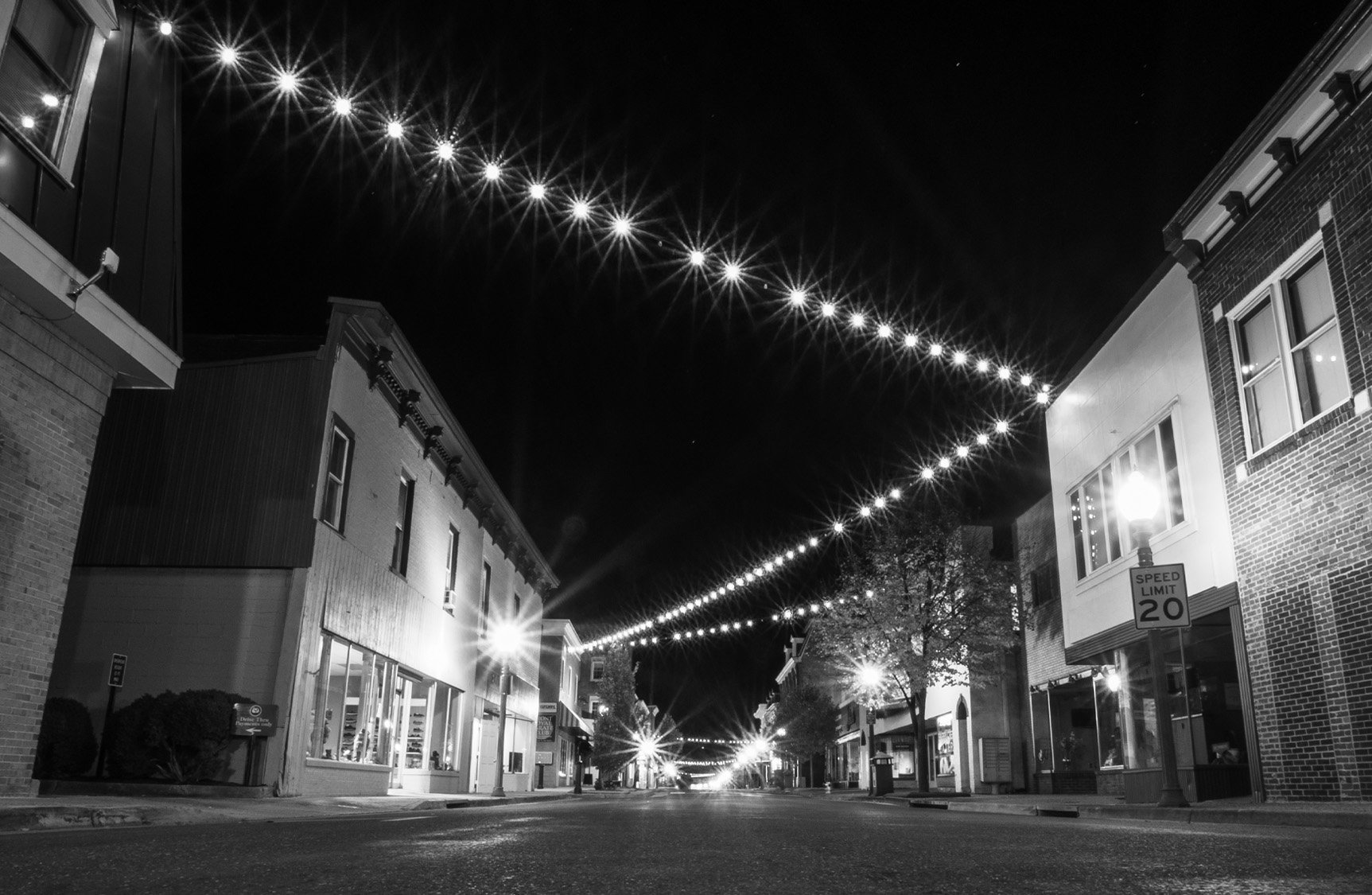
When we talk about empty storefronts in small towns, the conversation often sounds deceptively simple.
Someone sees an empty building and asks:
Why doesn't somebody open something there?
Or a business closes and the reaction is:
They must not have been doing very well.
Sometimes that's true.
Sometimes the business concept wasn't right. Sometimes the owner made mistakes. Sometimes the products weren't what customers wanted.
But sometimes a business can look reasonably busy, have customers walking through the door every day, generate what sounds like a significant amount of revenue — and still struggle to survive.
That's because there's a number most customers never see.
The amount of money that has to come through the register every single day just to keep the doors open.
So what does it actually cost to operate a small retail business in a downtown like Front Royal?
Let's do the math.
Start With an Empty Storefront
Imagine someone decides to open a small independent retail shop downtown.
Nothing extravagant.
Maybe 1,500 to 2,000 square feet.
They find a space, sign a lease and start building their dream.
Let's give our hypothetical business some fairly reasonable monthly expenses:
Rent: $2,500
Payroll: $6,000
Utilities, internet and phone: $750
Insurance: $500
Software, point-of-sale systems and subscriptions: $400
Advertising and marketing: $500
Cleaning, maintenance and supplies: $350
We're already at $11,000 per month.
And we haven't purchased anything to sell yet.
We haven't paid credit card processing fees.
We haven't paid accounting fees.
We haven't paid taxes.
Nothing has broken.
The air conditioner hasn't stopped working.
Nobody has called a plumber.
And perhaps most importantly:
The owner hasn't been paid.
Revenue Isn't Profit
This is probably one of the biggest misunderstandings about small businesses.
People see customers carrying shopping bags and assume the business is making money.
But sales and profit are two very different things.
Let's say our hypothetical retailer operates at a 45% gross margin.
That means if the store sells something for $100, approximately $55 of that sale represents the cost of the merchandise, leaving $45 in gross profit to pay all those other expenses.
So if our store has $11,000 in monthly operating expenses, it doesn't need $11,000 in sales to break even.
It needs roughly $24,500 in sales just to generate enough gross profit to cover those expenses.
And remember:
The owner still hasn't really been paid.
If we want our business owner to earn even a modest $50,000 annual income for taking the financial risk, signing the lease, managing employees, ordering inventory, handling customers and probably working far more than 40 hours a week, the business needs another $4,167 per month in gross profit.
Now our required monthly revenue climbs toward $34,000.
That's more than $400,000 a year in sales.
For a small downtown store.
Suddenly that little storefront doesn't look quite so simple.
Now Let's Turn That Into Customers
Monthly sales numbers are difficult to visualize.
Customers are easier.
Suppose the average customer spends $40.
To generate $34,000 in monthly revenue, our hypothetical store needs about 850 transactions every month.
If the business is open 26 days a month, that's approximately:
33 paying customers every day.
Not 33 people walking past the window.
Not 33 people coming downtown.
Not 33 people attending an event.
Not 33 people walking into the store.
Thirty-three people who actually buy something.
Every day.
Now imagine it's February.
It's 38 degrees and raining.
There aren't many tourists.
There isn't an event downtown.
It's Tuesday afternoon.
Where do those 33 customers come from?
That's the challenge.
Foot Traffic Isn't Enough
We talk a lot about foot traffic in downtown economic development.
And foot traffic absolutely matters.
But there's an important distinction:
Foot traffic isn't economic activity until someone spends money.
Five thousand people can attend an event downtown.
That's fantastic.
But if most of those people walk around, listen to music, take some pictures and go home, the economic impact on surrounding businesses may be far smaller than the crowd suggests.
Conversely, 500 visitors who eat at a restaurant, shop in three stores and stay overnight might have a much larger economic impact.
That's why simply asking, "How many people came downtown?" doesn't tell us enough.
We should also be asking:
What did they do while they were here?
How long did they stay?
How much did they spend?
How many businesses did they visit?
Those are very different questions.
Then There's Inventory
Retail businesses have another enormous challenge.
Inventory.
Our hypothetical retailer can't open with empty shelves.
Depending on the type of business, the owner may need tens of thousands of dollars worth of merchandise before opening day.
And once something sells, it has to be replaced.
That's where cash flow becomes complicated.
Imagine the store has a great Saturday and sells $4,000.
Sounds fantastic.
But perhaps $2,200 of that represents merchandise that now needs to be reordered.
Credit card fees take another piece.
Payroll is coming.
Rent is coming.
Utilities are coming.
Sales tax collected from customers has to be remitted.
Suddenly that $4,000 Saturday looks very different.
The register may have been busy.
The bank account may have grown.
But much of that money already belongs somewhere else.
Before Opening Day Comes the Really Expensive Part
There's another cost we often overlook when looking at an empty storefront.
Getting it ready.
Suppose someone finds a vacant downtown building and wants to open a restaurant, boutique or specialty shop.
The space might need flooring.
Lighting.
Electrical work.
Plumbing.
Painting.
HVAC repairs.
Signage.
Fixtures.
Shelving.
ADA improvements.
Internet infrastructure.
Permits.
Professional services.
And that's before purchasing inventory, equipment or furniture.
Suddenly the entrepreneur who everyone says should "just open something there" might need $50,000, $100,000 or considerably more before making the first sale.
Where does that money come from?
Savings?
A home equity loan?
A bank?
Credit cards?
Investors?
Every one of those options represents risk.
That's something worth remembering when someone finally does take the chance.
Small Businesses Don't Have Infinite Pricing Power
The obvious answer might be:
Charge more.
Sometimes businesses should.
But pricing has limits.
A local retailer isn't operating in isolation.
The customer standing inside a downtown Front Royal store can pull out a phone and compare prices with businesses across the entire country in seconds.
Amazon can deliver tomorrow.
Walmart is a short drive away.
Thousands of online retailers are available without leaving the couch.
That creates a difficult balancing act.
Local businesses have to generate enough margin to survive while remaining competitive enough that customers don't immediately buy elsewhere.
And small businesses generally don't have the purchasing power of national chains.
The company ordering 500,000 units is probably paying less per unit than the independent retailer ordering 24.
Yet somehow the independent business is expected to compete on price.
That's a difficult equation.
Tourism Helps — But Locals Still Matter
Front Royal has something many small communities would love to have.
Visitors.
We're the northern gateway to Shenandoah National Park. We have the Shenandoah River, Skyline Drive, the Appalachian Trail and the Blue Ridge Mountains surrounding us.
Tourism brings outside dollars into our economy, and those dollars are incredibly important.
But tourism is also seasonal.
A downtown business can't build its entire financial model around a handful of busy weekends.
Rent is still due in February.
Payroll is still due in February.
Insurance is still due in February.
That's why a healthy downtown needs both visitors and local customers.
Tourists can provide the peaks.
Residents help create the floor.
And that leads to an uncomfortable question:
How often do those of us who say we want a vibrant downtown actually spend money downtown?
"Shop Local" Can't Just Be a Slogan
I'm not suggesting everyone should buy everything locally.
That's unrealistic.
Price matters.
Convenience matters.
Selection matters.
Sometimes Amazon has what you need.
Sometimes Walmart is cheaper.
Sometimes the local business simply doesn't carry it.
That's life.
But there is a disconnect when we complain about empty storefronts while directing almost every discretionary dollar somewhere else.
We can't simultaneously say:
"I wish downtown had more stores."
and
"I buy everything online because it's easier."
Eventually those two choices collide.
Businesses don't survive because communities want them.
They survive because customers support them.
One Purchase Doesn't Seem Like Much
Suppose 1,000 local households decided to spend just $25 more per month with an independent Front Royal business.
That's not a dramatic lifestyle change.
Maybe it's lunch.
A birthday gift.
A shirt.
A cup of coffee and something small.
A book.
A service.
Twenty-five dollars.
But across 1,000 households, that's:
$25,000 per month.
Over a year:
$300,000 in local spending.
Now imagine 5,000 households doing it.
That's $1.5 million moving through local businesses over the course of a year.
Individual purchasing decisions feel insignificant.
Collectively, they're economic development.
Which Brings Us Back to the Empty Storefront
The next time we walk past an empty storefront and wonder why someone doesn't put something there, maybe we should think about what we're actually asking.
We're asking someone to risk their money.
Possibly their savings.
Maybe their house.
We're asking them to commit to thousands of dollars in monthly expenses before knowing whether enough customers will walk through the door.
We're asking them to compete against some of the largest corporations in the world.
We're asking them to survive January and February so they'll still be there when the tourists return in spring.
And we're asking them to believe that this community will support them.
That's a pretty big leap of faith.
Economic development isn't simply convincing someone to open a business.
The real accomplishment is creating an environment where that business has a reasonable chance of still being open five years later.
That requires property owners.
It requires local government.
It requires tourism.
It requires entrepreneurs.
It requires visitors.
And yes, it requires customers.
Because ultimately there is only one thing that keeps the lights on inside a small business.
Someone has to walk through the door and buy something.
So perhaps the question isn't just:
"Why doesn't somebody open something in that empty storefront?"
Maybe the better question is:
"If they did, would enough of us support them to keep it from becoming empty again?"
More from Scott Turnmeyer
I write about photography, business, mindset, bowling, and the bigger questions that don’t always have easy answers. You can explore more articles, photography, and projects here:
Blog Home
About Scott Turnmeyer
Fine Art Photography
Photography Workshops & Experiences
Digital Consulting