
Agritourism - Beyond Pumpkin Patches
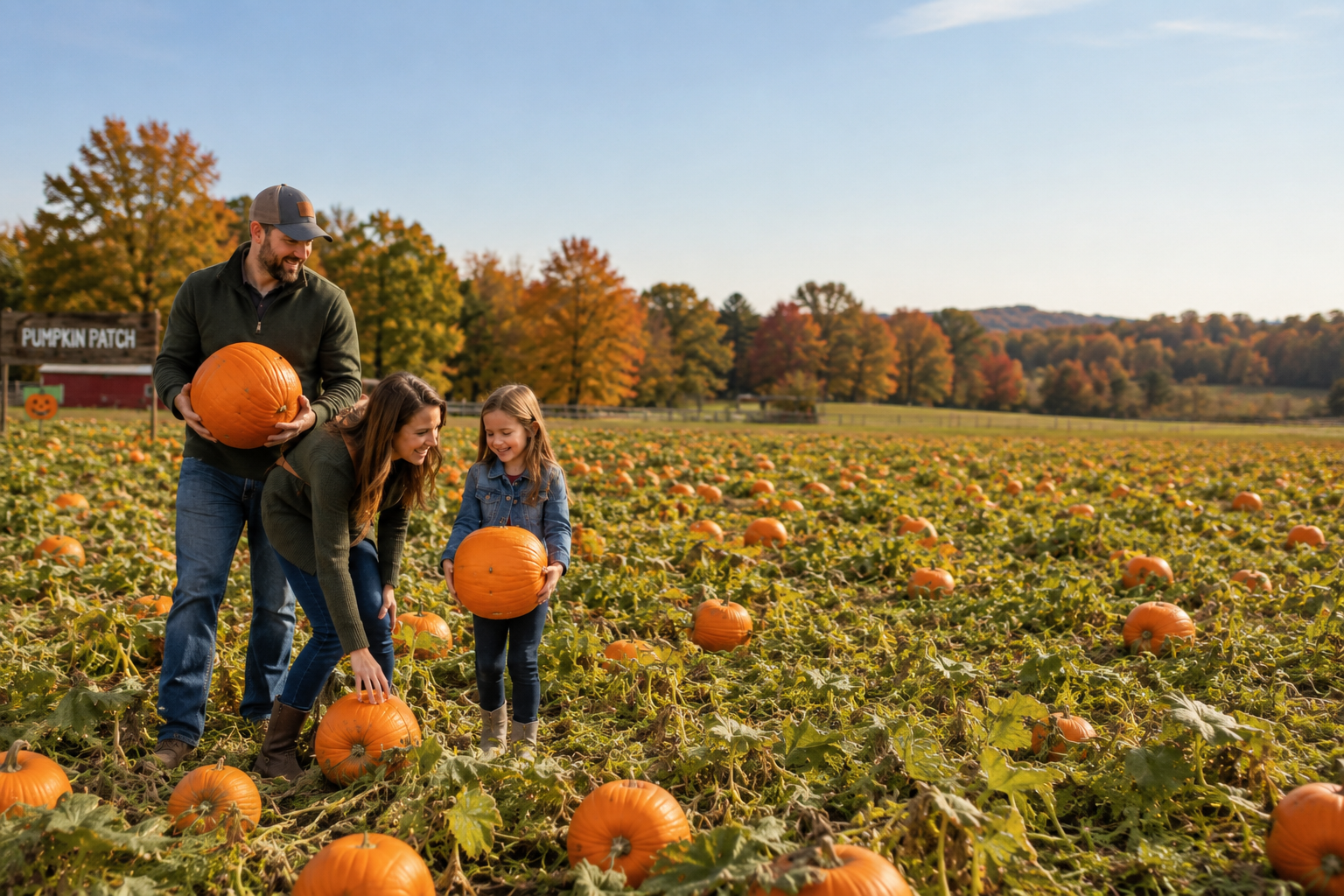
When most people hear the word agritourism, they probably picture a pumpkin patch in October.
Maybe a corn maze. A hayride. Apple picking. A farm stand along the side of the road.
Those are all agritourism.
But they barely scratch the surface of what agritourism can be — particularly for rural communities looking for sustainable ways to grow their visitor economy without losing the character that makes people want to visit in the first place.
Agritourism isn't simply about getting people onto farms.
It is about turning agriculture, rural landscapes, local products and the stories behind them into experiences.
And experiences are increasingly what visitors are looking for.
What Is Agritourism?
Virginia law actually defines agritourism fairly broadly.
An agritourism activity can include recreational, entertainment or educational activities on a farm or ranch that allow visitors to experience farming, wineries, ranching, horseback riding, history, culture, pick-your-own operations, natural attractions and other rural activities.
In other words, Virginia already recognizes something important:
Agritourism is much bigger than seasonal farm attractions.
The USDA takes a similarly broad view, including activities such as hunting, fishing, horseback riding, overnight accommodations, farm tours, festivals and animal experiences.
And economically, this is becoming a meaningful part of American agriculture.
According to the USDA's 2022 Census of Agriculture, farms and ranches generated approximately $1.26 billion from agritourism and recreational services. After adjusting for inflation, that was a 12.4% increase from 2017.
Even more interesting, farms reported agritourism income in roughly 57% of U.S. counties.
This isn't some niche idea limited to a handful of famous destinations.
It's happening all over the country.
The Opportunity Is the Experience
One of the mistakes communities make when thinking about tourism is assuming they need to build attractions.
Sometimes they do.
But sometimes the attraction already exists.
A working cattle farm is ordinary to the farmer who sees it every morning.
It may not be ordinary to a family from Northern Virginia.
A beekeeper checking hives may consider it another day of work.
To someone who has never seen honey harvested, it's an experience.
The same thing applies to vineyards, orchards, flower farms, horse farms, Christmas tree farms, maple syrup producers, mushroom growers, lavender farms and countless other agricultural businesses.
The underlying agricultural operation already exists.
Agritourism asks a different question:
What part of this could become an experience?
That's where things get interesting.
Think Beyond the Pumpkin Patch
Imagine the possibilities.
A cattle farm could offer occasional farm tours where families learn how the operation works.
A beekeeper could offer small-group demonstrations followed by honey tastings.
A flower farm could offer pick-your-own evenings, photography sessions or flower-arranging workshops.
An orchard could host cider tastings, pruning demonstrations or farm-to-table dinners.
A horse farm could offer riding experiences or educational programs.
A vineyard can offer far more than a tasting room — vineyard walks, harvest experiences, blending classes and dinners overlooking the vines.
A Christmas tree farm doesn't necessarily have to generate visitor revenue only between Thanksgiving and Christmas. Workshops, photography sessions and seasonal events can extend the opportunity.
Even activities such as hunting and fishing can fall within the broader agritourism economy.
The common thread isn't agriculture alone.
It's participation.
Visitors aren't simply buying something.
They're doing something.
Agritourism and the Experience Economy
This distinction matters because tourism is increasingly built around experiences.
A visitor can buy honey almost anywhere.
Buying honey from the person who produced it after standing beside the hives and learning how a colony works is different.
You can buy a bottle of wine at a grocery store.
Drinking that wine while overlooking the vineyard where the grapes were grown is different.
You can buy flowers.
Walking through a field and cutting your own bouquet is different.
The physical product may be similar.
The experience surrounding it creates additional value.
And unlike many forms of economic development, rural communities don't necessarily have to manufacture that authenticity.
They already have it.
Agritourism Can Create Multiple Revenue Streams
This is where agritourism becomes particularly interesting from an economic-development perspective.
The visitor may pay for the experience itself.
Then they may purchase products.
Then they may eat somewhere nearby.
Then they may visit another attraction.
Some will stay overnight.
That means one agricultural business can become part of a much larger visitor-economy chain.
Consider a couple spending a Saturday visiting a rural area.
They might begin with a morning farm experience.
They stop at a local restaurant for lunch.
They visit a winery that afternoon.
They browse shops downtown.
Maybe they stay overnight.
The farm didn't have to capture every dollar for the community to benefit.
It simply needed to provide one of the reasons for the trip.
That's how visitor economies work.
Agritourism Also Creates Direct-to-Consumer Opportunities
There's another advantage that shouldn't be overlooked.
Agritourism puts the producer directly in front of the customer.
USDA data shows that direct-to-consumer agriculture is already a significant market. In 2022, 116,617 farms sold directly to consumers, generating approximately $3.3 billion in sales.
Across all direct marketing channels — including consumers, retailers, institutions and other buyers — producers sold about $17.5 billion in food in 2022.
Agritourism can strengthen those direct relationships.
A visitor who tours a farm today might become someone who orders its products online later.
A winery visitor might join a wine club.
Someone attending a farm dinner might begin purchasing beef directly from the farmer.
A family visiting an orchard might return every fall.
Tourism can create customers.
And customers can continue producing economic value long after the trip ends.
Why This Matters in Virginia
Agriculture isn't a side note in Virginia's economy.
It is the Commonwealth's largest private industry.
According to the Virginia Department of Agriculture and Consumer Services, agriculture generates an annual economic impact of more than $82 billion and supports more than 381,000 jobs.
That means rural economic development and agricultural economic development are closely connected.
For communities surrounded by farmland, mountains, rivers and small towns, agritourism offers something particularly valuable:
Economic growth that can actually reinforce rural identity instead of replacing it.
We don't have to turn every rural community into something else to create economic activity.
Sometimes the opportunity is to help people experience what is already there.
The Role of Destination Development
This is also where destination development becomes important.
Marketing alone won't create a successful agritourism economy.
You need products to market.
That doesn't necessarily mean government needs to build attractions. In many cases, its most useful role may be helping remove barriers and connecting existing businesses.
Communities can identify agricultural businesses interested in tourism.
Tourism organizations can help those businesses understand what visitors are looking for.
Economic-development organizations can help entrepreneurs think through business models.
Localities can make sure regulations don't unnecessarily discourage reasonable agricultural experiences while still addressing legitimate health and safety concerns.
Virginia law itself recognizes the importance of these activities. State law generally limits local regulation of agritourism activities at agricultural operations unless there is a substantial impact on public health, safety or general welfare.
That creates an environment where agricultural businesses can explore new opportunities.
But opportunity still requires entrepreneurship.
We Should Be Building Trails, Not Just Attractions
One of the most interesting possibilities is connecting individual agritourism businesses together.
Instead of promoting one farm, promote an experience.
A farm trail.
A winery and brewery trail.
A farm-to-table trail.
A pick-your-own trail.
A Virginia-made food trail.
A weekend itinerary combining farms, outdoor recreation, restaurants and downtown shopping.
Now the visitor has multiple reasons to travel.
More importantly, they have reasons to stay longer.
And length of stay matters.
A visitor who comes for two hours has limited economic impact.
A visitor who spends an entire day has more.
A visitor who stays overnight creates even more.
The goal shouldn't simply be attracting visitors.
It should be creating enough things for them to do that they want to remain in the community.
Rural Doesn't Mean Empty
There's a tendency in economic development to look at rural communities and see what's missing.
No amusement park.
No convention center.
No massive entertainment district.
No major resort.
But that's looking at rural tourism backward.
The opportunity often isn't what's missing.
It's what already exists.
Farms.
Mountains.
Rivers.
Orchards.
Vineyards.
Small towns.
Local food.
Local history.
People who know how to make and grow things.
Those aren't weaknesses in a tourism economy.
They're assets.
The challenge is turning those assets into experiences visitors can discover, purchase and remember.
Beyond Pumpkin Patches
There will always be room for pumpkin patches, corn mazes and hayrides.
They're successful because they turn agriculture into an experience.
The lesson isn't that every farm needs a corn maze.
The lesson is that almost every agricultural operation has a story.
Some of those stories can become experiences.
Some of those experiences can become businesses.
And enough of those businesses connected together can become a destination.
That's where agritourism becomes much more interesting than a pumpkin patch.
It becomes economic development.
More from Scott Turnmeyer
I write about photography, business, mindset, bowling, and the bigger questions that don’t always have easy answers. You can explore more articles, photography, and projects here:
Blog Home
About Scott Turnmeyer
Fine Art Photography
Photography Workshops & Experiences
Digital Consulting