
How Data Can Improve Visitor Experiences
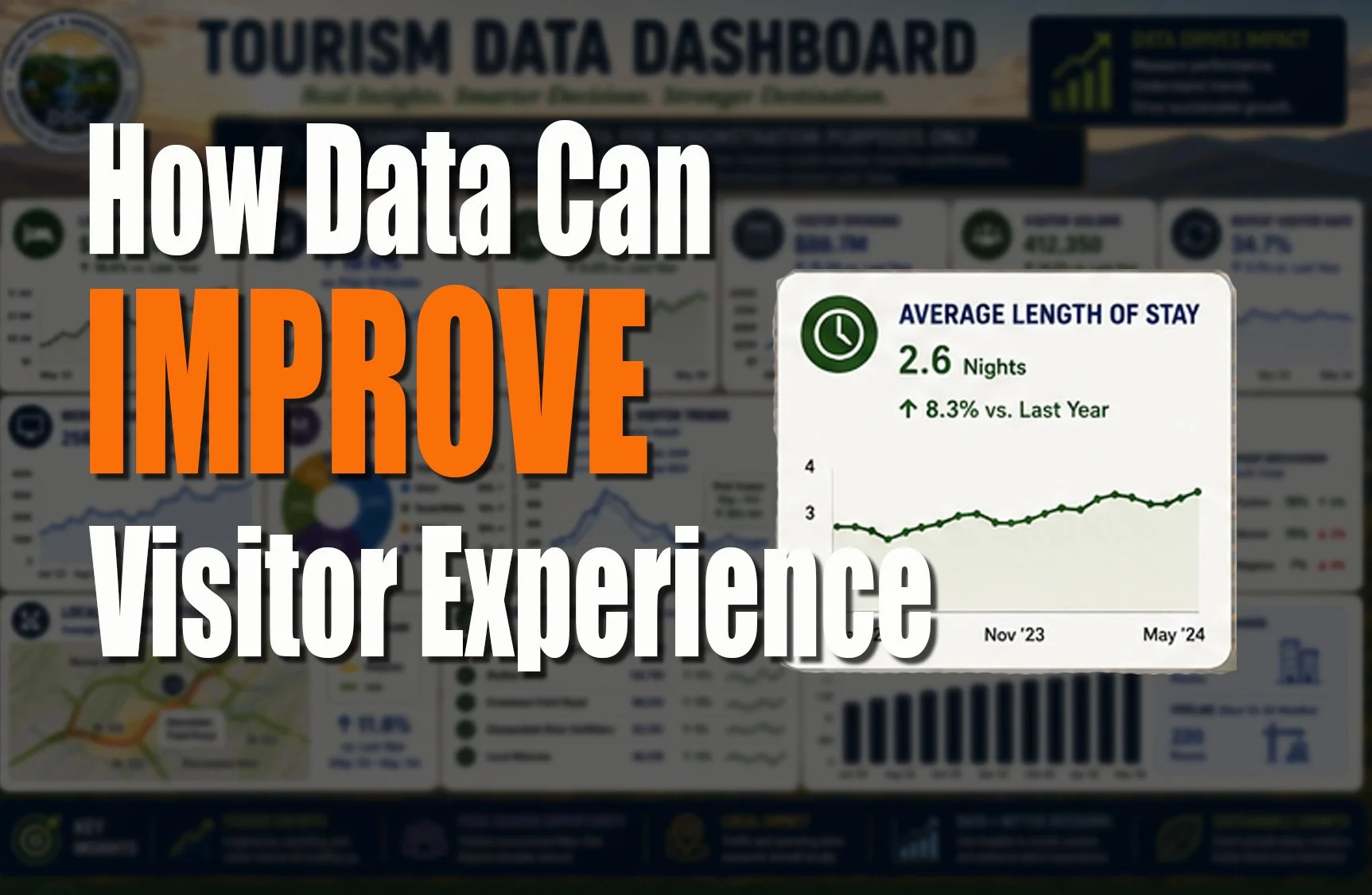
When people hear the word data, they often think about spreadsheets, charts, and complicated analytics.
But in tourism, data isn't really about numbers.
It's about understanding people.
Every visitor leaves behind clues about what they enjoy, where they spend their time, how they travel, and what could make their experience even better. When communities learn to use that information wisely, they can create destinations that are more enjoyable for visitors while also benefiting local businesses and residents.
Data Tells a Story
Every reservation, ticket sale, website visit, social media post, online review, and visitor survey tells part of a larger story.
Individually, these pieces of information may not seem important.
Together, they reveal patterns.
Perhaps families visit most often during weekends.
Maybe hikers are looking for additional trail information.
Perhaps visitors are spending time downtown but leaving before dinner.
These patterns help communities make better decisions instead of relying on assumptions.
Better Decisions Start With Better Information
One of the biggest mistakes destinations make is believing they already know what visitors want.
Sometimes they're right.
Often they're surprised.
For example, a tourism organization might assume visitors come primarily for historic attractions, only to discover that outdoor recreation is actually driving overnight stays.
A downtown might believe parking is the biggest concern, while visitor feedback consistently points to confusing wayfinding or limited public restrooms.
Without data, these challenges often go unnoticed.
Improving the Visitor Journey
The best destinations think about the entire visitor experience.
It begins long before someone arrives.
How easy is it to find information online?
Can visitors quickly locate parking?
Are attractions easy to discover?
Is signage clear?
Can visitors easily find restaurants, shopping, and nearby activities?
Data helps answer these questions.
Website analytics may reveal that visitors frequently search for parking information.
Online reviews may mention difficulty finding trailheads.
Mobile location data may show that visitors rarely walk beyond a certain section of downtown.
Each insight creates an opportunity to improve the experience.
Small Improvements Can Make a Big Difference
Not every improvement requires a major investment.
Sometimes the smallest changes create the biggest impact.
Adding directional signs.
Improving website navigation.
Creating better maps.
Adjusting event schedules.
Adding more seating.
Extending visitor center hours during peak seasons.
These decisions become much easier when they're supported by real information instead of guesswork.
Supporting Local Businesses
Better visitor data doesn't only benefit tourism organizations.
It helps local businesses as well.
Understanding when visitors arrive, where they spend time, and how long they stay can help restaurants adjust staffing, retailers plan inventory, and event organizers schedule activities more effectively.
When businesses understand visitor behavior, everyone benefits.
Respecting Privacy While Learning
Using data responsibly is essential.
Communities don't need to know everything about individual visitors.
Instead, they should focus on trends and anonymous information that helps improve the overall experience.
The goal isn't surveillance.
The goal is better hospitality.
Visitors appreciate destinations that are easier to navigate, more welcoming, and designed around their needs.
Data Supports Better Destination Development
One of the principles of destination development is making decisions based on evidence rather than assumptions.
Data helps communities understand what's working, identify opportunities, and measure progress over time.
It answers questions like:
Are visitors staying longer?
Which attractions generate the most interest?
What events encourage overnight stays?
Which marketing campaigns produce actual visits?
Where should future investments be made?
Without reliable information, communities are simply guessing.
The Future of Tourism Is Smarter
Technology continues to provide better ways to understand visitor behavior.
Artificial intelligence, mobile analytics, website data, online reviews, and visitor surveys all provide valuable insights that were unavailable just a few years ago.
The communities that learn how to use these tools thoughtfully will be better positioned to create exceptional visitor experiences.
Final Thoughts
Data doesn't replace creativity.
It doesn't replace hospitality.
And it certainly doesn't replace great destinations.
What it does is help communities understand the people they're trying to serve.
When we understand our visitors better, we make better decisions.
Better decisions create better experiences.
And better experiences are what bring visitors back again and again.
More from Scott Turnmeyer
I write about photography, business, mindset, bowling, and the bigger questions that don’t always have easy answers. You can explore more articles, photography, and projects here:
Blog Home
About Scott Turnmeyer
Fine Art Photography
Photography Workshops & Experiences
Digital Consulting